Home › Dive Sites › Kauai
Kauai is Hawaii's seasonal secret. In summer, the north shore opens to lava-tube reefs at Tunnels Beach, and the legendary Niihau trips run to remote walls and arches. Year-round, the south shore delivers caverns and Hawaii's best shore dive.
What is the best scuba diving on Kauai?
Kauai scuba diving is the most seasonal in Hawaii. In summer, the north shore opens up, and Tunnels Beach becomes a top lava-tube reef dive. The south shore dives year-round, led by Sheraton Caverns and Koloa Landing, often called Hawaii's best shore dive. For advanced divers, the remote Niihau trips to Lehua Rock are world-class, with dramatic walls, monk seals, and sharks. In short, time your Kauai dive trip for summer to unlock the island's full range.
Kauai is Hawaii's oldest main island, and it feels different underwater. The diving here is quieter and more seasonal than on Oahu or Maui. As a result, it rewards divers who plan around the conditions. Get the timing right, and Kauai delivers some of the most dramatic diving in the state.
The key fact is seasonality. Kauai's north shore faces the winter swell head-on. Therefore, sites like Tunnels Beach are summer-only. By contrast, the south shore stays sheltered, so it dives well all year. Understanding this split is the secret to a great Kauai dive trip.
Conditions are slightly more variable than other islands. Visibility usually runs 60 to 80 feet, which is good but a touch lower than Maui or Kona. Water temperature holds between 74°F and 80°F, so a 3mm wetsuit works well. Because Kauai sees more rain and runoff, a local guide really helps you pick the right site on the right day.
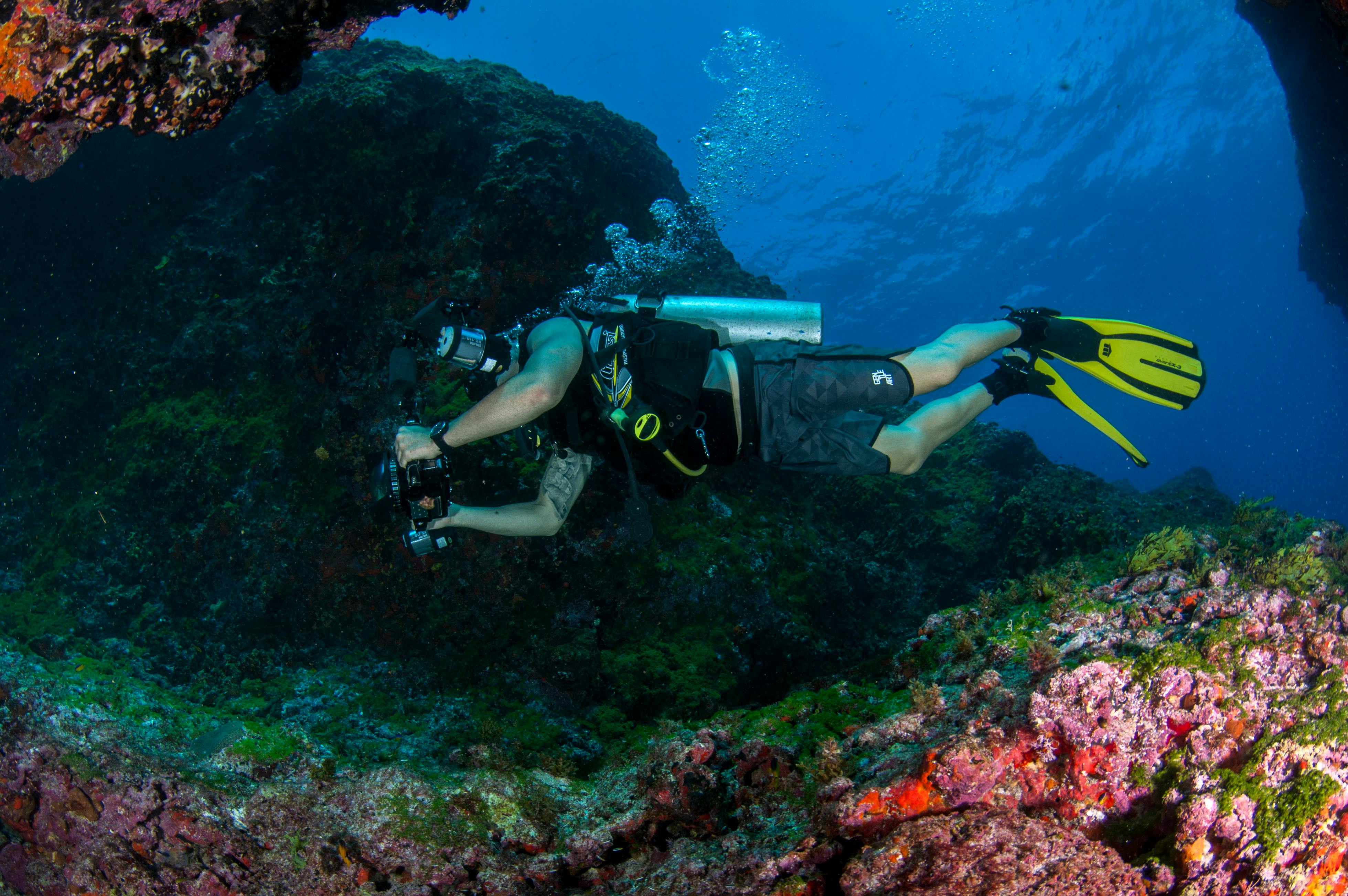
The payoff is unique terrain. Kauai offers lava tubes, caverns, and the otherworldly Niihau walls. Turtles are common, monk seals appear on the remote sites, and the reefs hold plenty of endemic fish. To compare Kauai with the other islands, start at our Hawaii dive sites hub, and see what lives here in the Hawaii marine life guide.
Kauai diving is seasonal, so timing your visibility online matters. Eye To Ad Media helps Hawaii dive shops and tour brands rank in Google and AI search, then convert that traffic into bookings with fast, modern websites. If you run Niihau or south-shore trips, make sure divers find you first.
Explore Eye To Ad Media ›Kauai's dive map splits cleanly by coast and season. The south shore dives year-round, while the north shore and Niihau open up in summer. Here are the sites worth planning around.
Tunnels Beach is Kauai's most famous shore dive, and it earns the reputation in summer. Named for its maze of lava tubes and arches, it offers swim-throughs, healthy reef, and frequent turtle sightings. When the north swell calms from May to September, the water turns clear and gentle. However, in winter the surf makes this site dangerous, so it is strictly a summer dive. Always check conditions with a local operator first.
Sheraton Caverns is Kauai's signature cavern dive, and it runs year-round. Located off Poipu on the sheltered south shore, it features a series of lava tubes that divers can swim through. Inside, you will often find resting whitetip reef sharks and green sea turtles. Because the south shore stays calm, this site is reliable across the seasons. It is a favorite for both newer and experienced divers.
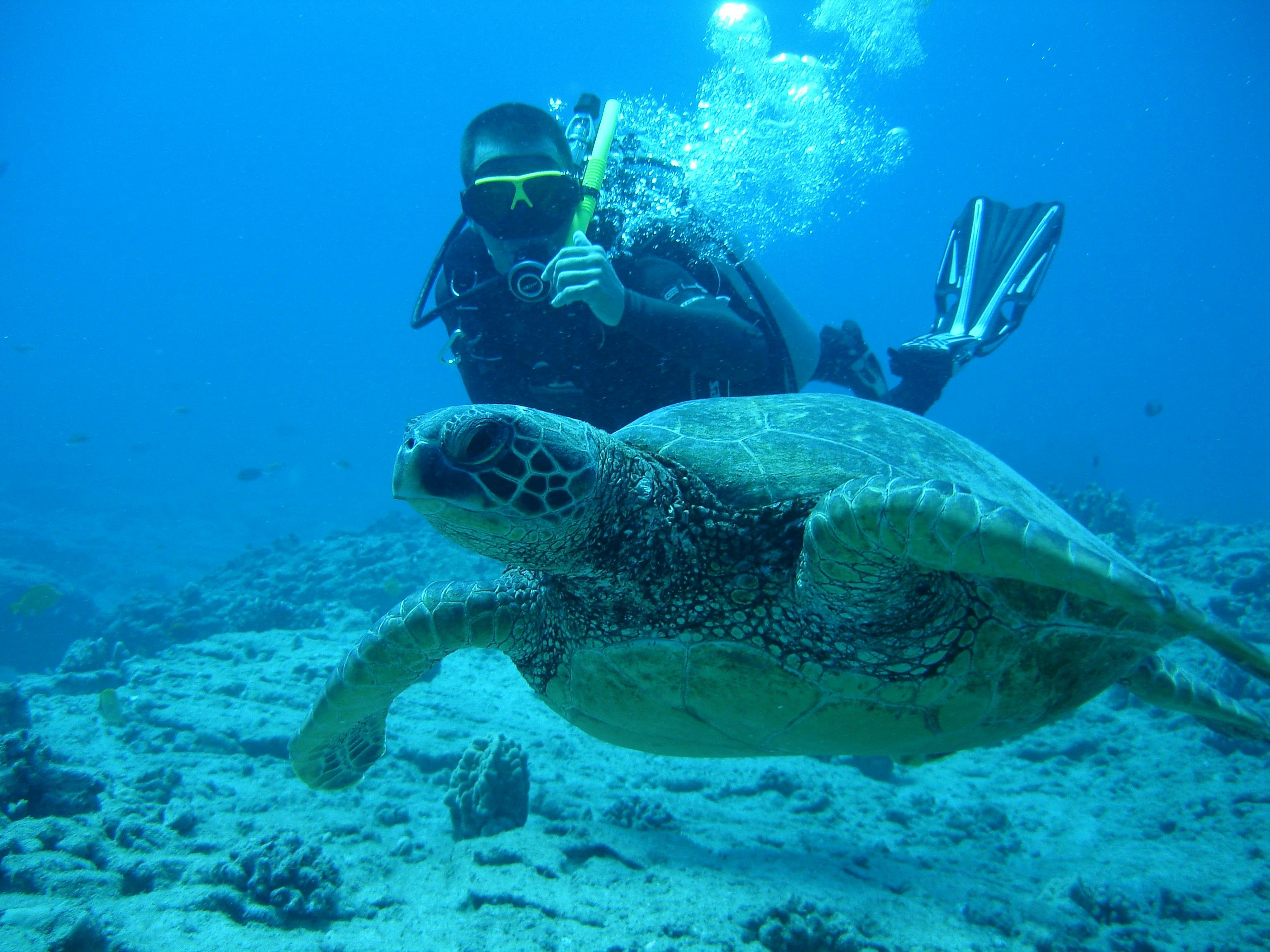
Koloa Landing, on the south shore, is widely called the best shore dive in Hawaii. The reason is access: a calm, protected cove with an easy entry and shallow, sheltered water. As a result, it dives well year-round and suits everyone from beginners to instructors training students. You will see turtles, eels, octopus, and reef fish without ever boarding a boat. It is also a popular night-dive site.
Niihau is Kauai's bucket-list trip. The remote "Forbidden Island" sits about 17 miles offshore, and dive boats reach it only on long summer day trips. There, sites like Lehua Rock offer dramatic walls, arches, and deep blue water. Because it is so remote and exposed, the marine life is exceptional. Divers encounter Hawaiian monk seals, sharks, and large pelagic visitors. Due to the depth, distance, and currents, Niihau is an advanced, world-class destination.
Nualolo Kai brings you to the foot of the legendary Na Pali Coast. Reached by boat in summer, it sits beneath towering green cliffs. The reef here is healthy and lightly dived, so it feels wild and remote. Turtles, reef fish, and the occasional shark patrol the area. Pairing this dive with the scenery above water makes for an unforgettable day.
For a south-shore change of pace, the General Store wreck adds variety. It is a small wreck site off Poipu that now shelters marine life. While it is not as grand as Oahu's wrecks, it offers an easy, interesting dive. Operators often pair it with Sheraton Caverns on a two-tank trip.
Niihau deserves extra attention, because it is unlike anything else in Hawaii. The "Forbidden Island" is privately owned and largely off-limits, which keeps its waters wild. Dive boats make the long crossing only on calm summer days, so trips are rare and prized. As a result, the reefs and walls see very few divers each year.
The diving itself is dramatic. At Lehua Rock, a crescent-shaped tuff cone rises from deep water, and its walls plunge into the blue. Therefore, you dive vertical faces, arches, and pinnacles rather than flat reef. Big animals patrol these sites. Hawaiian monk seals, one of the rarest seals on Earth, are regular visitors. In addition, divers often see grey reef sharks, Galapagos sharks, and the occasional manta or large jack. Because the conditions can be challenging, Niihau is strictly for advanced divers — but for those ready, it ranks among the best diving in the Pacific.
Kauai's marine life rewards the effort it takes to dive here. Green sea turtles are common across every coast, often resting in caverns or grazing on the reef. Whitetip reef sharks tuck into the lava tubes at Sheraton Caverns and Tunnels Beach. Meanwhile, the reefs hold octopus, eels, and many endemic Hawaiian fish you will not see elsewhere.
The remote sites raise the stakes. At Niihau, Hawaiian monk seals appear regularly, which is a genuine highlight given how rare they are. Larger sharks patrol the walls there too, and pelagic visitors drift past in the deep blue. Because Kauai sees fewer divers, the wildlife often feels less wary. For a full breakdown of every species, our Hawaii marine life guide has the details.
More than any other Hawaiian island, Kauai rewards good timing. The difference between summer and winter is dramatic, so plan accordingly.
The north shore calms down, unlocking Tunnels Beach and the Na Pali Coast. The Niihau trips run in flat seas. This is Kauai diving at its best — clear water, gentle conditions, and access to every site on the island.
Big north swells close Tunnels Beach and the north shore entirely. The Niihau trips pause. However, the south shore keeps diving well, so Sheraton Caverns and Koloa Landing remain reliable options all winter long.
Because of this split, summer is the clear choice for a dedicated Kauai dive trip. Still, winter visitors can dive the south shore happily. For a full month-by-month view across all islands, see our best time to dive Hawaii guide.
Match each Kauai dive site to your skill level, the coast, and the season.
| Site | Coast | Type | Level | Season |
|---|---|---|---|---|
| Tunnels Beach | North | Reef / lava tubes (shore) | Beginner–Inter. | Summer |
| Sheraton Caverns | South | Caverns (boat) | Intermediate | Year-round |
| Koloa Landing | South | Reef (shore) | Beginner | Year-round |
| Niihau / Lehua Rock | Offshore | Walls / pelagic (boat) | Advanced | Summer |
| Nualolo Kai | Na Pali | Reef (boat) | Intermediate | Summer |
| General Store Wreck | South | Wreck (boat) | Beginner–Inter. | Year-round |
Run a tour or business in Hawaii? Big Island SEO helps Hawaii brands win local search — from Hawaii SEO services to Google Maps visibility and AI search optimization. Grow your bookings across the islands.
Kauai rewards preparation. Because conditions shift with the season and the coast, a little planning goes a long way.
Kauai has sites for everyone, but match them carefully. Beginners should start at Koloa Landing, a calm year-round shore dive. Certified divers can add Tunnels Beach and Sheraton Caverns in season. The Niihau trips, however, are for advanced divers only, due to depth, distance, and current. Always be honest about your experience when booking.
Kauai diving feels wilder and less crowded than the busier islands. Boats are smaller, sites are quieter, and the scenery above water is spectacular. Because the island sees more rain, visibility can dip after storms. Therefore, a flexible plan and a local operator make all the difference. They will steer you to the clearest water on any given day.
Book Niihau trips far ahead, since they sell out in summer. Reserve early for any north-shore dive too. Operators rent full gear, so you can travel light, though a personal mask helps. For night dives at Koloa Landing, bring two lights. Finally, use reef-safe sunscreen, as Hawaii law requires.
Planning more islands? Compare Oahu scuba diving, Maui scuba diving, and Big Island diving, or browse Hawaii's top dive experiences.
A Kauai dive day depends on the site, but the rhythm is familiar. Knowing the flow helps you relax and enjoy it more.
For a shore dive at Koloa Landing, you meet your guide at the cove, gear up on land, and walk in. As a result, there is no boat ride and very little fuss. For boat dives like Sheraton Caverns or Niihau, you check in at the harbor first. Then the crew fits your gear and reviews the plan. The Niihau trip is longer, so expect an early start and a full day on the water.
Before every dive, the divemaster gives a thorough briefing. They cover depth, route, marine life, and signals. After that, you descend and explore, usually for two tanks with a surface interval between. Throughout, the crew tracks your air and comfort. Because Kauai operators run smaller groups, you tend to get personal attention. Finally, you surface, swap stories, and head back to shore.
Kauai's reefs are quieter and, in places, less disturbed than the busier islands. Therefore, keeping them that way matters. Never touch or stand on coral, since even light contact harms it. Likewise, keep your distance from turtles and especially from monk seals, which are critically endangered and legally protected. Control your buoyancy so your fins never strike the reef. In addition, Hawaii law requires reef-safe sunscreen, so pack the right kind.
Because Kauai sees runoff after heavy rain, avoid diving right after big storms when visibility drops and reefs are stressed. Good local operators will guide you on this. By diving carefully, you help protect Kauai's wild, lightly visited sites for the future. When you are ready to plan more, explore Hawaii's full range of dive experiences and check the best time to dive Hawaii.