Home › Experiences
Some dives stay with you forever. Manta rays barrel-rolling under the lights. Sharks circling in the open blue. Sunlight pouring through a lava cathedral. These are the Hawaii dive experiences worth crossing an ocean for.
What are the best dive experiences in Hawaii?
The best Hawaii dive experiences span every island. The Kona manta ray night dive is the headliner, ranked among the top ten dives on Earth. Oahu delivers thrilling cage-free shark dives and easy wreck dives. Maui and Lanai offer glowing cavern dives, and the Big Island's Pelagic Magic black-water dive is otherworldly. Meanwhile, turtle and reef encounters are guaranteed on nearly every dive. In short, Hawaii packs more bucket-list dives into one destination than almost anywhere on Earth.
Hawaii is not just a place to dive. It is a place to collect experiences you will talk about for years. Because the islands sit alone in the Pacific, they offer encounters you simply cannot find together anywhere else. On a single trip, you might meet manta rays, sharks, turtles, and monk seals.
Variety is the theme. Each island has a signature experience. The Big Island owns the manta ray and black-water dives. Oahu leads for sharks and wrecks. Maui and Lanai shine for caverns, and Kauai offers wild, remote walls. Therefore, the experience you want often decides which island you visit.
This guide is your map to those experiences. Below, we break down each type of iconic Hawaii dive — what it is, where to do it, and who it suits. For two of the most famous, the manta ray dive and night diving, we go even deeper on dedicated pages. And because timing and skill level both matter, we also cover how to choose, how to prepare, and how to book. To compare the islands themselves, start with our Hawaii dive sites hub.
Whatever your level, there is an experience for you. Beginners can join the manta dive or meet turtles on a shallow reef. Certified divers add wrecks, caverns, and sharks. Advanced divers chase black water and remote walls. To see what swims through it all, browse our Hawaii marine life guide.
The best experiences only sell when travelers can find them. Eye To Ad Media helps Hawaii dive operators, tour brands, and experience providers rank in Google and AI search, then convert that traffic into bookings with fast, high-converting websites. Put your dive in front of ready-to-book travelers.
Learn more at eyetoad.com ›Here are the six experiences that define Hawaii diving. Tap the manta ray and night-diving cards for our full, dedicated guides.
Hawaii's most famous dive. Lights draw Pacific manta rays with 14-foot wingspans to feed in barrel rolls inches from your mask. Shallow, safe, and beginner-friendly — and ranked among the top ten dives on Earth.
Beginner FriendlyAfter dark, the reef transforms. Hunting octopus, glowing creatures, and the surreal Pelagic Magic black-water dive reveal a world that hides by day. Our guide covers gear, technique, and the best sites.
Beginner to AdvancedCage-free encounters with Galapagos and sandbar sharks in the open Pacific. Dozens of sharks circle at 30 feet while experienced guides keep the dive controlled. Hawaii is home to 40-plus shark species.
IntermediateExplore the YO-257 and San Pedro off Waikiki, or the intact Corsair fighter plane resting on the sand. Hawaii's wrecks have become living reefs, draped in turtles, eels, and schooling fish.
Intermediate to AdvancedSunlight streams through lava-tube ceilings at Lanai's cathedrals, Maui's Five Caves, and Kauai's Sheraton Caverns. The light beams and swim-throughs make these among Hawaii's most photogenic dives.
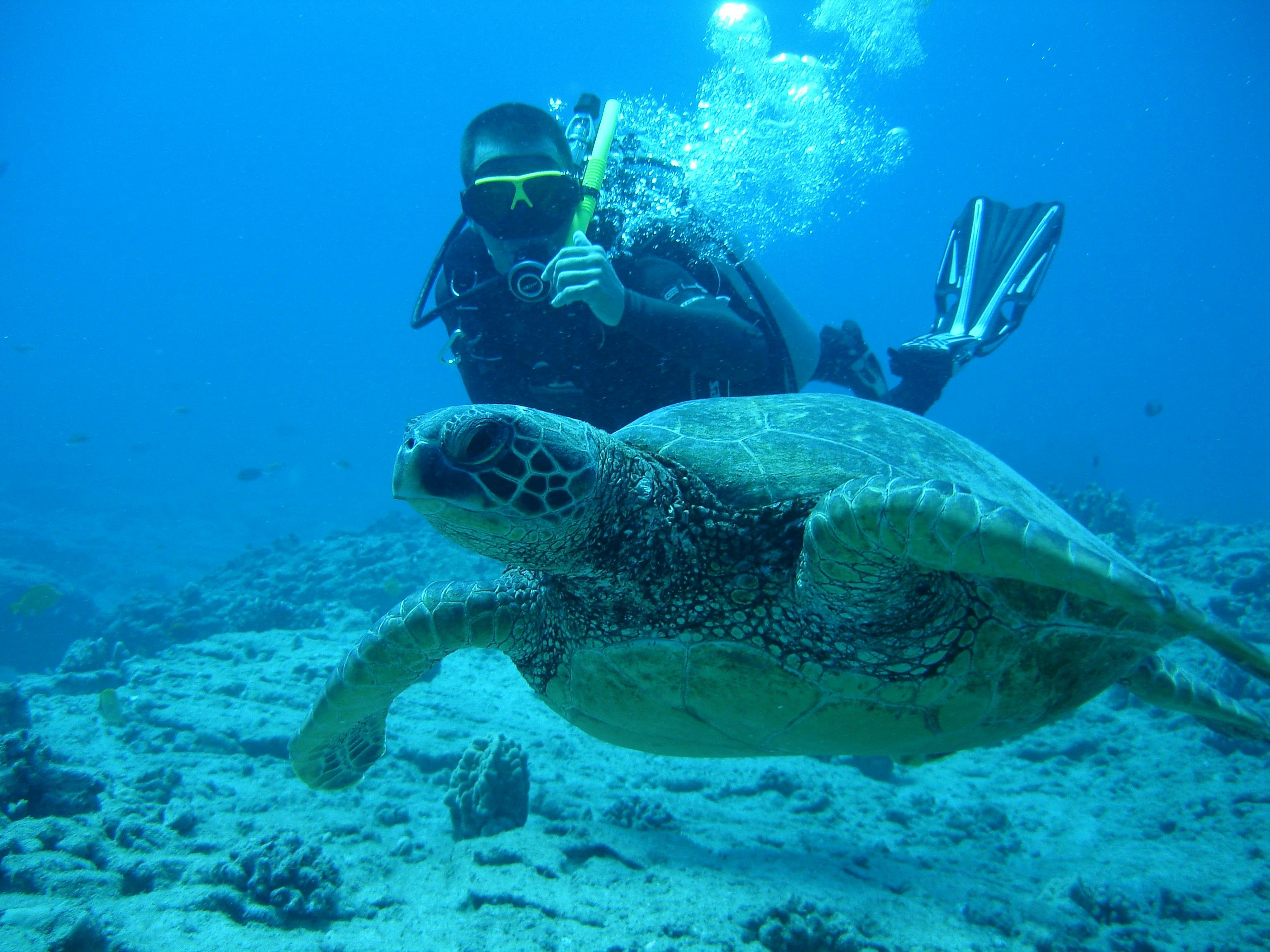
IntermediateThe classic Hawaii dive. Green sea turtles glide over coral while endemic fish fill the reef. Gentle, shallow, and suitable for everyone — turtle encounters are part of nearly every dive in Hawaii.
All LevelsUse this table to match each iconic experience to the right island and your skill level.
| Experience | Best Island | Level | When |
|---|---|---|---|
| Manta Ray Night Dive | Big Island (Kona) | Beginner+ | Year-round, nightly |
| Pelagic Magic (Black Water) | Big Island (Kona) | Advanced | Year-round, calm nights |
| Shark Diving | Oahu (Haleiwa) | Intermediate | Year-round |
| Wreck Diving | Oahu & Maui | Intermediate–Adv. | Year-round |
| Cavern Diving | Lanai, Maui, Kauai | Intermediate | Year-round (Kauai summer) |
| Turtle & Reef | Every island | All levels | Year-round |
One trip rarely covers everything, and that is fine. Most divers focus on one or two signature experiences and build the trip around them. For example, a Big Island week pairs the manta dive with reef and black-water dives. An Oahu trip combines sharks and wrecks. A Maui base adds caverns, with an easy day boat to Lanai. If you have more time, island-hopping lets you stack several bucket-list dives into one vacation. Either way, the experience you crave most should anchor the plan.
With so many iconic dives, choosing can feel hard. Fortunately, a few simple questions make it easy. Start with what moves you most, then match it to an island and your skill level.
Choose the manta ray night dive on the Big Island. Nothing else in Hawaii compares to watching 14-foot mantas loop inches from your face. Better still, it is shallow and beginner-friendly, so almost anyone can do it. We cover every detail on our manta ray dives page.
Head to Oahu's North Shore for the cage-free shark dive. There, you float at 30 feet while dozens of sharks circle in the open blue. The dive is controlled and safe, yet the thrill is real. Read more on our Oahu scuba diving page.
Try night diving. After dark, the reef reveals hunting octopus and glowing life. For the boldest divers, the Pelagic Magic black-water dive floats you over a 1,000-foot bottom while deep-sea creatures rise toward the lights. Our night diving guide explains how to prepare.
Go wreck diving. The YO-257 off Waikiki and the Corsair plane wreck offer dramatic, life-covered structures to explore. Wrecks combine adventure with marine life, which makes them endlessly rewarding.
Choose cavern diving or a turtle reef dive. The lava cathedrals of Lanai glow with filtered light, while turtle dives offer gentle, guaranteed encounters. Both suit divers who prefer wonder over adrenaline.
Plenty of places offer good diving. Hawaii offers something rarer: a concentration of world-class experiences found nowhere else together. Several factors combine to make that possible.
First, isolation shapes everything. Hawaii is the most remote island chain on Earth, more than 2,000 miles from the nearest continent. As a result, evolution went its own way here. Roughly a quarter of Hawaii's reef fish are endemic, meaning they exist only in these waters. Therefore, even a simple reef dive shows you species you cannot see anywhere else.
Second, the geology creates dramatic terrain. Because the islands are volcanic, the underwater landscape is full of lava tubes, arches, caverns, and steep walls. Consequently, dives like Lanai's cathedrals and Kona's lava tubes feel sculpted and otherworldly. Flat sandy reefs are the exception, not the rule.
Third, the open Pacific delivers big animals. Manta rays, sharks, monk seals, spinner dolphins, and even seasonal humpback whales all pass through. Moreover, the clear, warm water makes encounters comfortable and safe. Add reliable year-round conditions on the leeward coasts, and you have a destination that rewards every kind of diver. For the full cast of marine life, see our Hawaii marine life guide.
If you are planning your first Hawaii dive trip, a little know-how goes a long way. These tips apply across every island and experience.
Open Water certification unlocks the most experiences, including wrecks, sharks, and caverns. If you are not certified, do not give up. Many operators offer Discover Scuba sessions, which let beginners dive with an instructor. The manta ray dive even has a snorkel option, so non-divers can join too. In short, there is a way in at every level.
Because each island has a signature dive, choose your destination around the experience you want most. For mantas and black water, fly to the Big Island. For sharks and wrecks, choose Oahu. For caverns, pick Maui or Lanai. Many divers combine two islands on one trip to collect several experiences. To compare them, start at our Hawaii dive sites hub.
Hawaii's famous dives fill fast, especially the manta dive in summer. Therefore, reserve well ahead. When you choose an operator, favor small groups, current certifications, and a clear safety focus. Smaller boats mean more attention and a better experience. Our Hawaii dive shops page points you to trusted operators by island.
Most Hawaii diving runs year-round on the sheltered coasts. However, some experiences are seasonal. Kauai's north shore and the Niihau trips are summer-only, while winter brings humpback whale song to Maui. For a complete month-by-month breakdown, see our best time to dive Hawaii guide.
A great experience starts before you hit the water. With a little preparation, you will be comfortable and ready for anything Hawaii offers.
Operators rent full gear, so you can travel light. Even so, a personal mask greatly improves comfort, since fit varies from face to face. For night and manta dives, bring or rent two dive lights — a primary and a backup. A 3mm wetsuit handles most Hawaii water, which sits between 72°F and 82°F. Finally, pack reef-safe sunscreen, because Hawaii law requires it.
If you are newer to diving, build up to the bigger experiences. Start with a calm turtle reef dive to settle your buoyancy and breathing. Then add the manta dive, which is shallow and beginner-friendly. Save sharks, wrecks, and black water for once you feel relaxed underwater. This approach keeps every dive enjoyable rather than stressful.
Hawaii's experiences depend on healthy reefs and wildlife. Therefore, dive with care. Never touch or chase mantas, sharks, turtles, or monk seals, all of which are protected. Keep your hands off the coral, and control your buoyancy so your fins never strike the reef. Because these animals draw divers from around the world, responsible diving protects the very experiences you came for. To learn more about the species you will meet, explore our Hawaii marine life guide, then pick your island at the dive sites hub.
Offer dive experiences on Hawaii Island? Big Island SEO helps Kona and Hilo operators win the searches that fill boats — from Big Island SEO services to Google Maps and AI search visibility. Reach more divers before they book.