Ask ten divers when to visit Hawaii and you'll get ten confident answers. The truth is more useful: Hawaii is genuinely diveable all 365 days of the year, and the "best" month depends entirely on what you're chasing. Glassy water and 100-foot visibility? The eerie underwater song of a humpback whale? Empty boats and shoulder-season prices? You can plan for any of them — you just can't have all of them at once. That trade-off is the whole decision, and this guide lays it out completely.
It's worth remembering the scale of what you're tapping into. Hawaii supports roughly 1.5 million scuba dives a year across more than 215 licensed dive operators, an industry with an economic impact north of $519 million annually. That maturity means superb infrastructure in every season — but also that timing your trip well pays off in conditions, price, and boat space. Let's get into it.
- Best overall
- May–October
- Best value
- Sep–Nov
- Warmest water
- Aug–Sep
- Coolest water
- Feb–Mar
- Whale season
- Nov–May
- Most reliable island
- Big Island (Kona)
The Two Seasons That Matter
Hawaii doesn't really have four dive seasons — it has two, and the dividing line is the North Pacific swell. Understanding that single pattern explains almost everything about when and where to dive.
Summer (May–October): The Easy Season
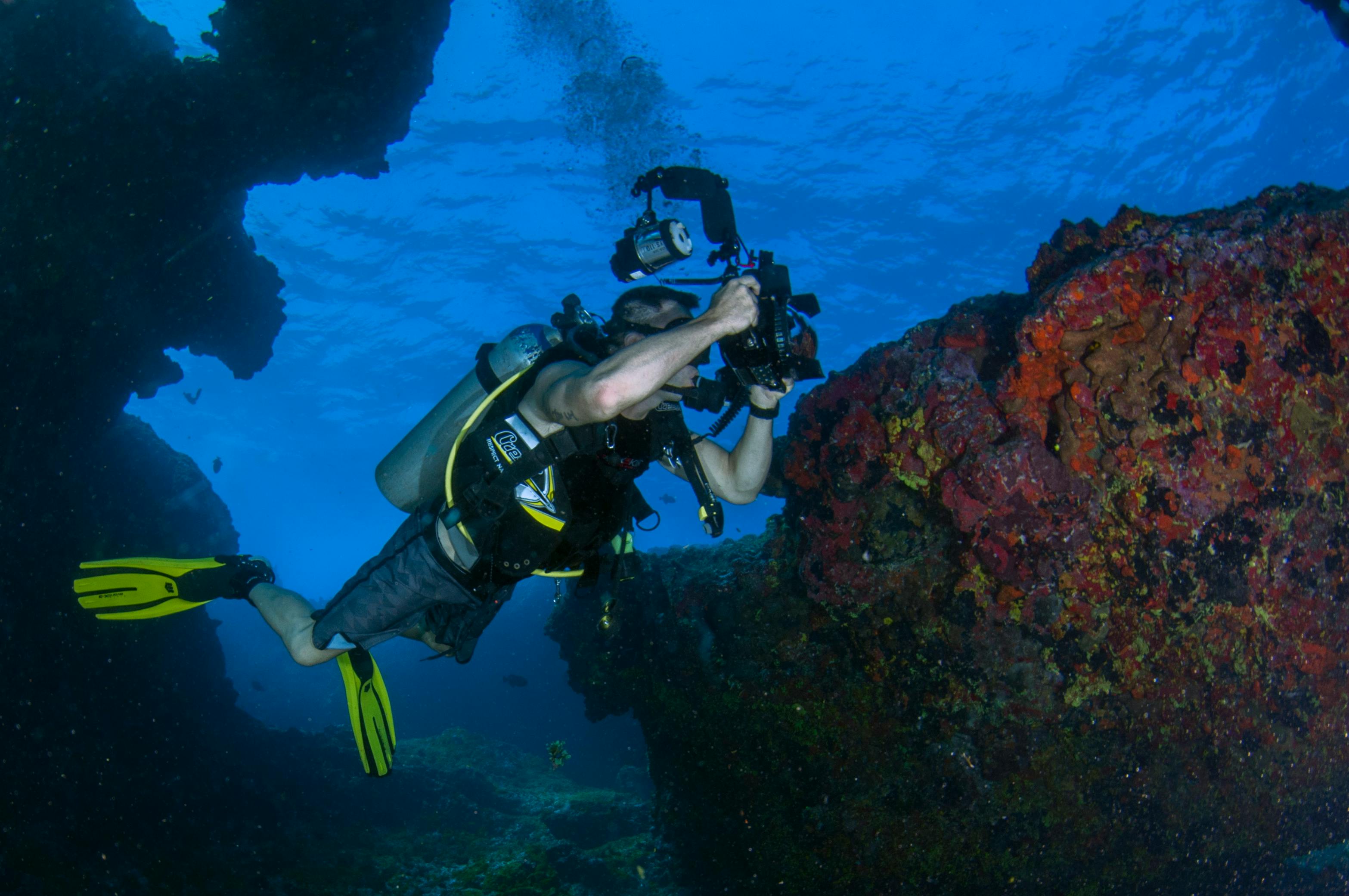
From about May through October, the big winter swells that pound Hawaii's north-facing shores fade away. Leeward coasts go glassy, water warms to roughly 78–83°F per NOAA buoy and sea-surface data, and visibility on protected sites routinely runs past 100 feet. Most divers wear just a 3mm shorty or a skin. This is prime time for nearly everything: reef dives, wrecks, lava tubes, caverns, easy shore entries, and the signature deep and drift sites. The only catch is that summer overlaps with peak tourist demand and school breaks — and, technically, hurricane season (June–November), though Hawaii's position in the central Pacific makes direct hits rare.
Winter (November–April): Whale Song & Bigger Swell
In winter, water cools to about 74–76°F — coolest in February and March — and a 3mm to 5mm full wetsuit becomes the norm. Powerful north and northwest swells arrive, which can make north-facing dive sites surgy or temporarily off-limits. The move is simple: follow the lee. South- and west-facing coasts stay calm and diveable, and the Kona coast barely notices. Winter's reward is the soundtrack: humpback whales fill Hawaiian waters from roughly November through May, peaking January to March. You can't legally dive with them, but you'll often hear their songs reverberating through the water and spot them from the boat on surface intervals — an unforgettable seasonal bonus.
Hawaii's dive calendar comes down to one pattern: in summer the whole ocean opens up; in winter you follow the lee and listen for whales.