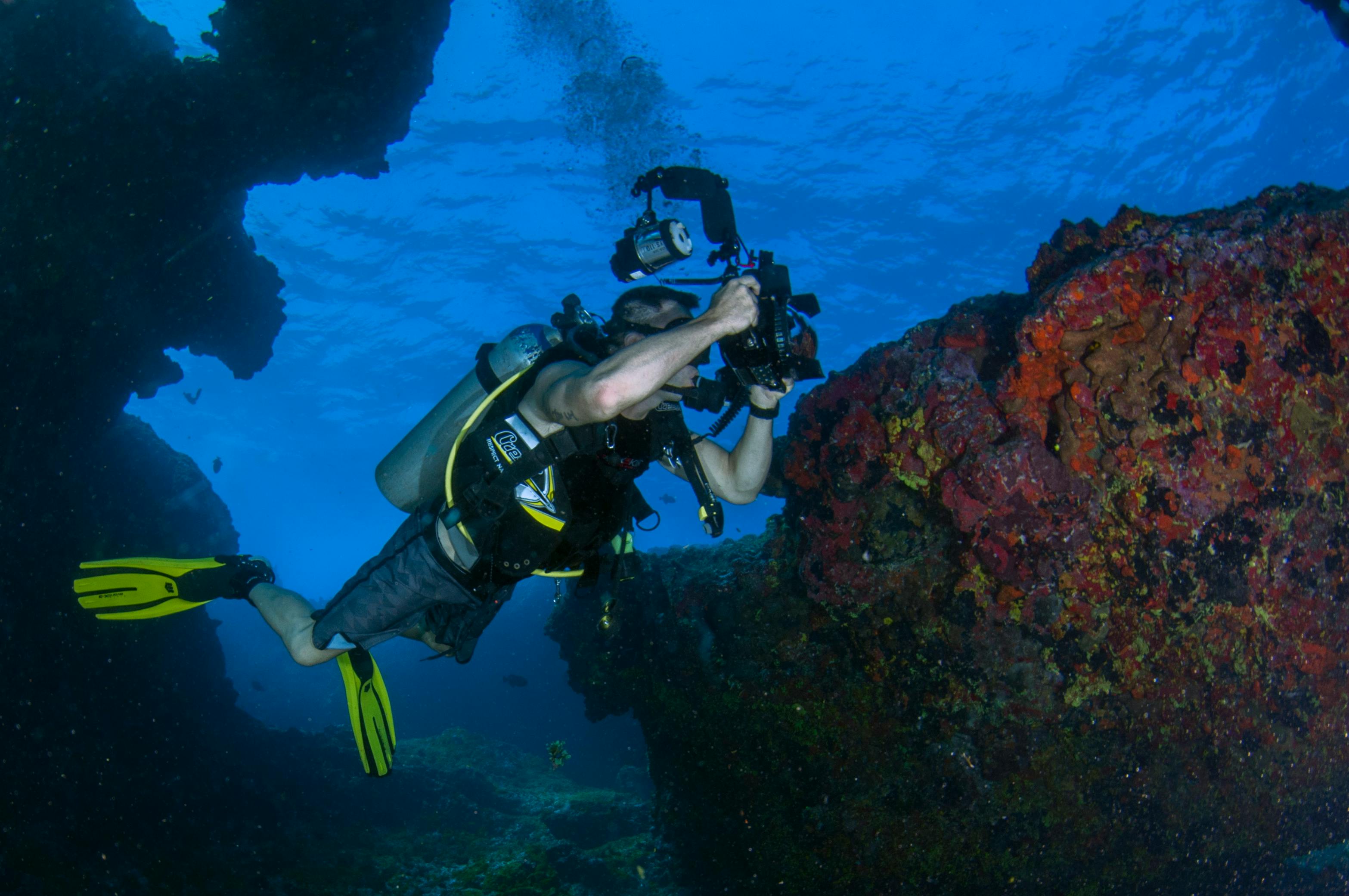
There is a moment, about ten minutes into the dive, when the first manta appears. You're kneeling on the sand in the dark, a ring of lights blazing upward, and the water above you is thick with swirling plankton. Then a shadow the size of a dining table banks into the glow, flips belly-up, and opens a mouth wide enough to swallow a beach ball. It loops, rolls, and comes back — close enough that you instinctively duck, even though it never touches you. Nobody surfaces from this dive quiet.
That scene plays out nearly every night off the Kona coast, and it has for decades. The manta ray night dive is the most famous dive in Hawaii and one of the most reliable big-animal encounters anywhere in the world. This guide covers everything: the biology that makes it work, your real odds, the two sites, current 2026 pricing, the dive-versus-snorkel decision, and how to book without getting burned.
- Where
- Kona, Big Island
- Depth
- ~25–50 ft
- Time in water
- ~45–60 min
- Sighting rate
- 80–90%
- Resident mantas
- ~300–450
- 2026 cost
- $90–200
Why Kona, and Why Every Night?
Manta rays live across the tropics, so the obvious question is why this dive only works here. The answer is a rare overlap of geography, biology, and a happy accident of history.
First, the biology. The animals you'll meet are reef manta rays (Mobula alfredi), one of the largest ray species on Earth. They commonly span 10 to 11.5 feet across the disc and can reach about 18 feet and 700 kilograms, yet they eat almost nothing but plankton, which they filter from the water through modified gill plates. They're long-lived — roughly 40 years or more — slow to mature, and produce just a single pup at a time, which is exactly why they're listed as Vulnerable on the IUCN Red List and why protecting them matters so much.
Second, the geography. Kona sits in the lee of the Big Island's massive volcanoes, which block the trade winds and leave the coast calm and clear almost year-round. Ancient lava flows created sheltered bays that funnel nutrient-rich currents — and the plankton they carry — close to shore. That makes nightly boat trips practical even in winter, something almost no other manta site can offer.
Third, the history. Decades ago, lights from a coastal hotel happened to attract plankton, and the mantas followed. Dive operators noticed, set their own lights, and the lighted night dive was born. The mantas learned that the lights mean an easy meal, and they've returned ever since. It's a genuinely wild encounter built on a learned behavior — not feeding, not baiting, just light and the plankton it gathers.
It feels less like chasing wildlife and more like being invited to sit still while the wildlife comes to you.
These Are Resident Mantas — and That's the Secret
The reliability of this dive isn't luck; it's a resident population. Researchers have catalogued roughly 300 to 450 individual manta rays along the Kona coast, identifying each one by the unique pattern of spots on its belly — a natural fingerprint that never changes. Many of these animals have names and years of sighting history. Your guide may well recognize the manta looping over your head.
How resident are they? A 2023 genomic study led by scientists at NOAA's Pacific Islands Fisheries Science Center and the University of Miami compared the DNA of reef mantas around Hawaii Island and the Maui Nui island complex. The researchers found strong divergence in the mitochondrial genome between island groups, evidence that female mantas are philopatric — they stay near the island where they were born and don't disperse, even to islands you can see across the channel. In plain terms: Kona's mantas are Kona's mantas. They aren't passing through. They live here, which is precisely why the show goes on every night, all year.
What Are Your Real Odds?
Here's where this dive separates itself from almost every other wildlife experience. Operators across the Kona coast report sighting success rates of 80 to 90 percent on any given night, climbing higher in the calm summer months. Some sites and seasons push past that: historical logs from Manta Village have shown success around 96 percent, and operators have reported 100 percent sightings on operating nights through the calmest summer months. Individual nights have logged anywhere from a handful of mantas to more than 30 at a single site.
Manta Sighting Success Rate by Site & Season
Reported share of trips with manta sightings · higher is betterFigures compiled from operator reports and historical logs (Manta Village 2013 data; 2025 summer operating-night reports). See sources.
Because nothing in nature is guaranteed, nearly every reputable operator offers a "manta guarantee" — a free re-ride on another night if no mantas show. Given the odds, you'll rarely need it, but it's the mark of a good operator and worth confirming when you book.
The Two Main Sites
You'll hear two names again and again. Both deliver the same essential magic; the difference is mostly about conditions and convenience.
Manta Village — Keauhou Bay
This is the original site, off Keauhou Bay about seven miles south of Kailua-Kona, near the Sheraton. It sits in a protected bay, so the water is often calmer — a real advantage on nights with swell and for anyone prone to seasickness. Historically it posts the highest sighting rates of the Kona sites, with operators reporting four or more rays on an average outing. Boats running from nearby Keauhou Bay reach it in just a few minutes, cutting down time at sea.
Manta Heaven — Garden Eel Cove
North of the Kona airport near Honokohau Harbor, Manta Heaven (also called Garden Eel Cove) is the other classic site. It's more exposed than Manta Village but draws large numbers of mantas and is the go-to for many north-side operators. A third, less-used spot operates near Kawaihae further north. Whichever your operator chooses, the encounter is the same: lights, plankton, and rolling giants.
| Site | Location | Water | Best For |
|---|---|---|---|
| Manta Village | Keauhou Bay, ~7 mi S of Kona | Sheltered, calmer | First-timers, rough nights, seasickness |
| Manta Heaven | Garden Eel Cove, near airport | More exposed | Big manta numbers, north-side stays |
Dive or Snorkel? How to Choose
This is the real decision, and it comes down to certification and comfort.
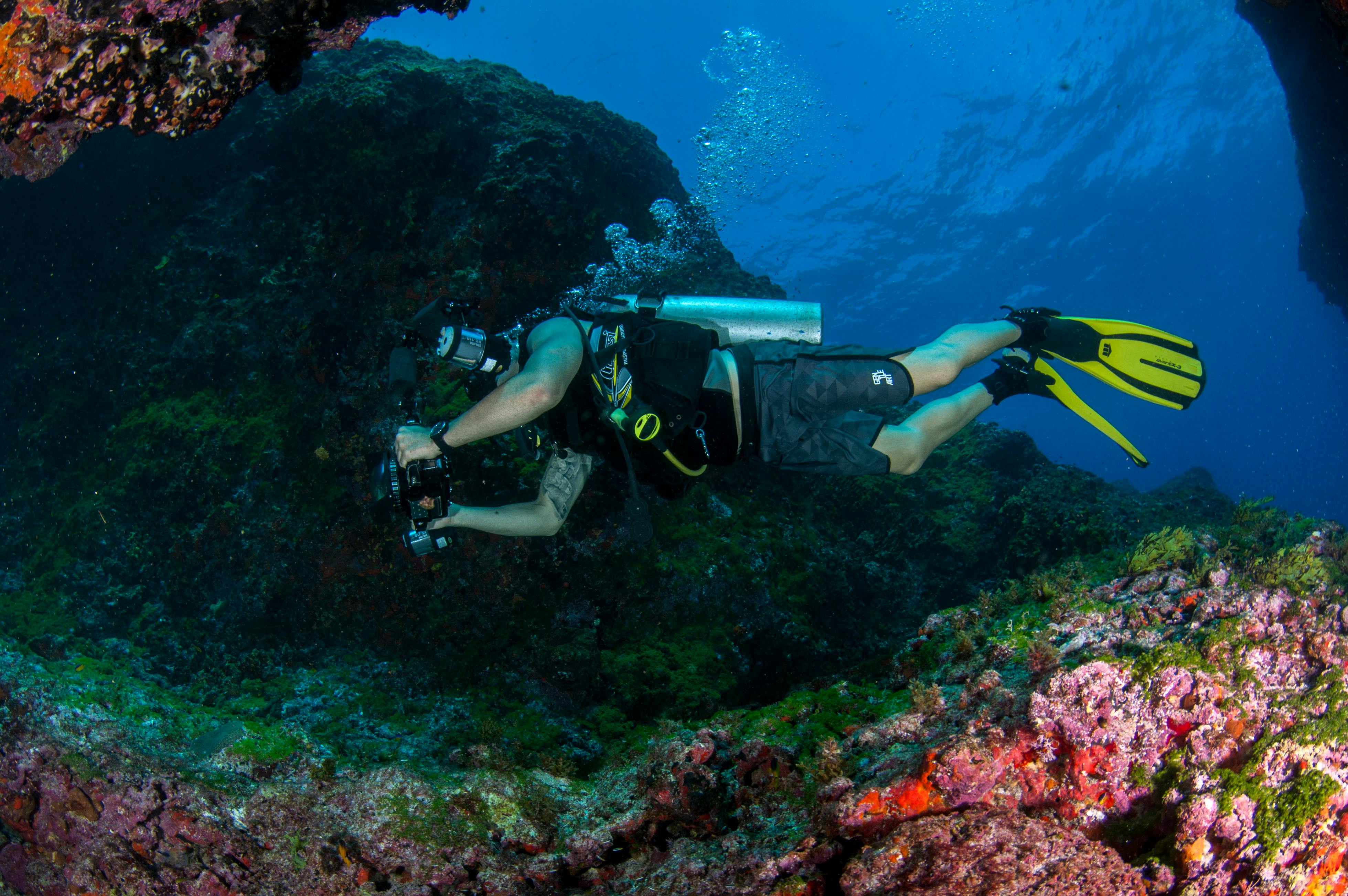
The scuba dive is for certified divers. You descend to a sandy bottom around 25 to 50 feet, kneel in a loose circle around the lights, and stay put for 45 to 60 minutes while mantas feed directly overhead. Because it's shallow and stationary, it's one of the most approachable night dives in the world — many divers do their very first night dive here. If you're newer to diving after dark, our night diving guide walks through the gear and technique first.
The snorkel is for everyone else. You float face-down at the surface, holding a lighted board, and watch the mantas feed below you. It requires no certification, no prior experience, just comfort floating in open water at night — and it's spectacular in its own right, often with the mantas rising right to the surface. Most operators take ages five and up.
Both options post high success rates. Choose the dive if you're certified and want the full immersion; choose the snorkel if you're not, if you have kids, or if anyone in your group prefers to watch from the surface.
What It Costs in 2026
Pricing has held fairly steady, with the usual summer-and-holiday bumps. Here's the current lay of the land.
Typical 2026 Kona Manta Tour Prices (per adult)
Ranges across reputable operators · gear, guide, and briefing includedCompiled from 2026 operator pricing guides. Kids typically ~20% off snorkel rates; prices rise in winter whale season. See sources.
A few things shape the final number: whether you snorkel or dive, group size, the departure point, and the season. The certified dive sits higher because of the gear and smaller groups. Kids usually get around 20 percent off the snorkel rate, and prices tend to climb December through April when whale season pulls in extra demand. Booking ahead — at least a week in summer — is wise, since tours fill fast.
How to Book Well
The encounter is reliable; the experience depends on the operator. A few habits make all the difference:
- Confirm the manta guarantee. A free re-ride if no mantas appear is standard among good operators — make sure yours offers it.
- Favor small groups. Fewer people means more space in the water and a calmer scene around the lights.
- Book early in your trip. If a night gets blown out by weather, you'll have backup dates to rebook.
- Match the site to your stomach. Prone to seasickness? Choose a sheltered Manta Village departure from Keauhou.
- Look for reef-friendly, conservation-minded crews. They protect the animals you came to see.
Our Hawaii dive shops guide points you toward trusted, conservation-minded operators, and the broader Big Island diving page covers what else to dive while you're on the Kona coast.
Diving Responsibly Around Mantas
One rule matters above all others: never touch a manta. Their skin carries a protective mucus coating, and a single touch can strip it away, leaving them open to infection. Keep your hands tucked in and stay low on the bottom; the mantas will come to you on their own. Don't chase or block a feeding manta's path, keep your fins still so you never stir the sand, and aim your dive light up into the water column to gather plankton rather than directly at the animals. And use reef-safe sunscreen — Hawaii law requires it anyway. These small courtesies keep a Vulnerable species returning to Kona for the divers who come after you. For more on the wildlife you'll meet, see our Hawaii marine life guide.
Is It Worth It?
Few experiences live up to a "top ten in the world" billing. This one does. It's reliable enough to plan a trip around, gentle enough for a first-timer, and genuinely wild — a learned dance between resident animals and a column of light, repeated almost every night off one stretch of Hawaiian coast. Bring a sense of stillness, leave the camera-chasing instinct at the surface, and let the mantas do what they came to do. You'll understand the silence on the boat ride home.