Hawaii's reefs are the whole reason we get in the water. They're among the most biologically rich ecosystems on the planet, home to hundreds of fish species found nowhere else, and the foundation for everything from the manta night dive to a beginner's first turtle sighting. They're also under real pressure — warming seas, storm runoff, and millions of well-meaning visitors. The good news is that protecting them isn't complicated. A handful of habits, practiced by every diver, keeps these reefs alive.
This guide covers the practical stuff: the sunscreen law you need to follow, why touching is off-limits, how buoyancy protects coral, and the wildlife etiquette that keeps Hawaii's protected animals safe. None of it costs you a better dive — in fact, reef-safe divers tend to be better divers. For more on the wildlife you're protecting, pair this with our Hawaii marine life guide.
- Sunscreen law
- Act 104 (2021)
- Banned
- Oxybenzone, octinoxate
- Use instead
- Mineral (zinc/titanium)
- Touch coral?
- Never
- Wildlife distance
- Give 50 ft
- Take home
- Nothing
The Sunscreen Law: What's Actually Banned
Hawaii made history here. In 2018 the legislature passed Act 104 (Senate Bill 2571), and since January 1, 2021, it has banned the sale and distribution of any sunscreen containing oxybenzone or octinoxate without a prescription — making Hawaii the first state in the nation to restrict sunscreen this way. Those two chemicals are found in an estimated 80% of sunscreens on the market, and studies link them to coral bleaching, DNA damage, and deformities even in tiny concentrations.
An important nuance: it's a sales ban, not a use ban. You won't be ticketed on the beach for wearing the wrong sunscreen, and you can technically bring your own. But the right move is obvious — leave the chemical stuff at home and use a reef-safe mineral sunscreen instead. Some counties go further: Maui County restricted all non-mineral sunscreens in 2022, and Hawaii County passed a similar measure, so on those islands mineral is effectively required.
What to Use Instead
Reef-safe means mineral (also called physical) sunscreen. Instead of absorbing UV like chemical filters, mineral sunscreens sit on the skin and reflect it — far gentler on coral. Read the label and match it to this list.
Sunscreen Ingredients: Avoid vs. Use
Check the active-ingredient panel before you buy✕ Avoid
- Oxybenzone (banned)
- Octinoxate (banned)
- Octocrylene
- Avobenzone
- Parabens & phthalates
- Nanoparticles / petrolatum
✓ Use
- Non-nano zinc oxide
- Non-nano titanium dioxide
- Mineral / "physical" formulas
- Lotions over sprays
- Rash guard or dive skin
- UPF clothing & hats
Oxybenzone and octinoxate banned for sale statewide under Act 104; other listed ingredients discouraged. See sources.
The single best trick? Cover up. A rash guard or dive skin protects most of your body and slashes the amount of sunscreen you need in the first place — better for your skin and the reef.
The Golden Rule: Never Touch
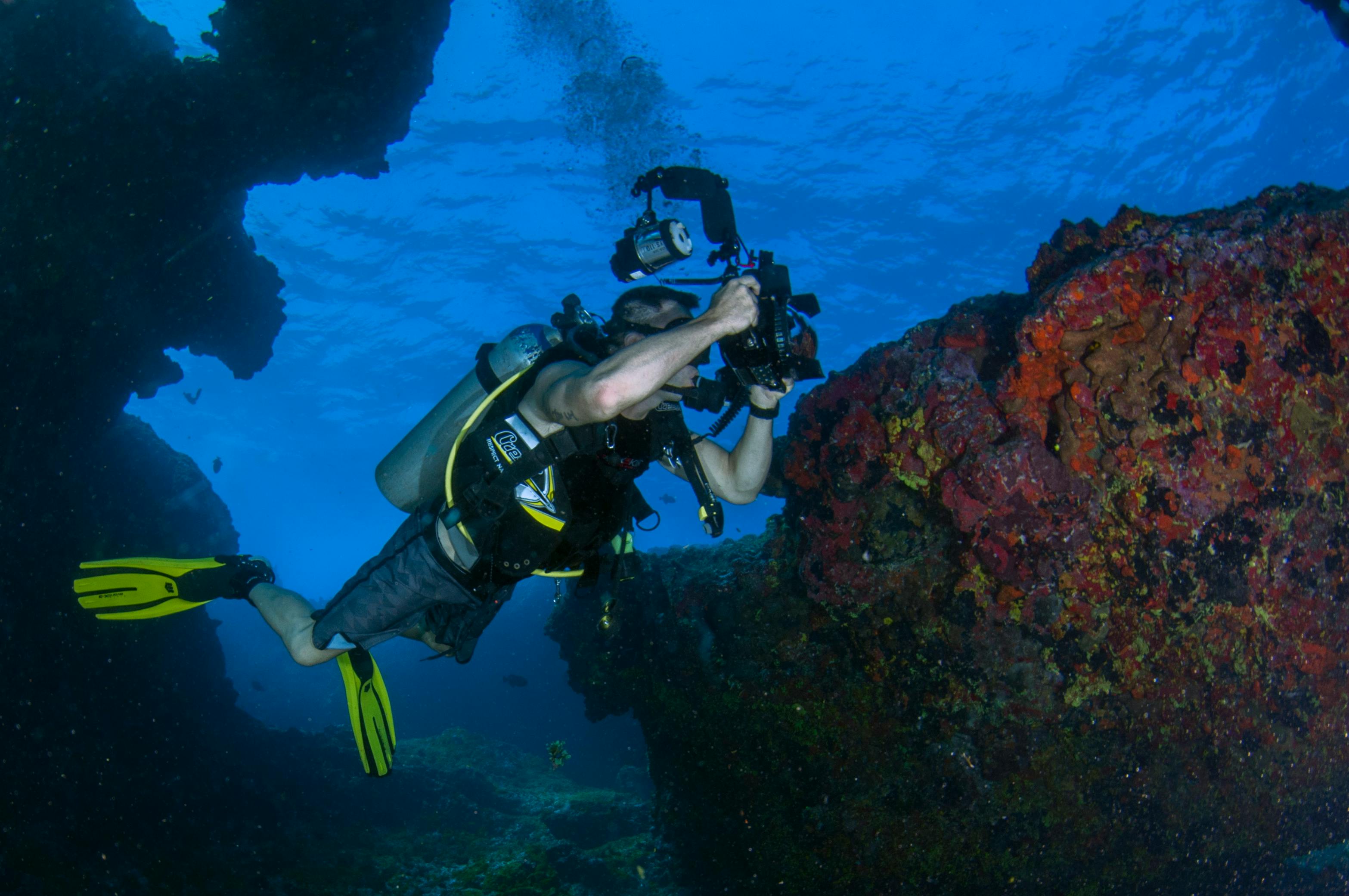
If you remember one thing underwater, make it this: look, but never touch. Coral may look like rock, but it's a living animal — a colony of tiny polyps — and it's astonishingly fragile. A single brush from a hand, fin, or dangling gauge can damage or kill tissue that took years to grow. So keep your hands to yourself, and never grab coral for balance or a photo.
The rule extends to wildlife. Hawaii's green sea turtles (honu) and endangered monk seals are legally protected, and touching, chasing, or crowding them is both harmful and illegal. Give animals space — at least 50 feet for turtles and seals — never block a turtle's path to the surface, and let curious animals approach on their own terms. On the manta dive, that means tucking your hands in and letting the rays come to you, which protects their delicate mucus coating. More on those encounters in our manta ray dive guide.
Coral isn't rock — it's a living animal that can die from a single touch. The reef you don't touch is the reef that's still there next year.
Buoyancy Is a Conservation Skill
Most reef damage from divers isn't malicious — it's accidental, and it comes down to buoyancy. A diver who's heavy, head-up, or unstreamlined drags fins across coral, plants a knee on a colony to steady a photo, or kicks up clouds of sediment that settle over the reef and smother it. None of it is intended. All of it is preventable.
Good buoyancy keeps you hovering safely above the reef, horizontal and relaxed, with gauges and octopus clipped close so nothing drags. It's the most underrated reef-protection skill there is — and it also makes you a calmer, more efficient diver who uses less air. If you're still working on it, a Peak Performance Buoyancy course or simply more dives will get you there. Practice over sand before you drift over delicate coral.
The Reef-Safe Diver's Checklist
Everything above, distilled into habits you can run through before and during every dive.
- Wear mineral sunscreen and cover up with a rash guard or dive skin.
- Touch nothing — no coral, no animals, no "just one quick feel."
- Master your buoyancy so fins and gear never contact the reef.
- Streamline your gear — clip off anything that dangles.
- Give wildlife space; let turtles, seals, and mantas come to you.
- Take only photos — no shells, coral, or souvenirs.
- Stow your trash and pick up any you find.
- Choose conservation-minded operators who brief and model these habits.
| Habit | Why it matters |
|---|---|
| Mineral sunscreen | Chemical filters bleach and kill coral |
| No touching | Coral dies from contact; wildlife is protected |
| Buoyancy control | Prevents fin strikes and smothering sediment |
| Give space | Reduces stress on protected animals |
| Take nothing | Shells and coral are part of the ecosystem |
Mālama i ke Kai
Hawaiians have a phrase for all of this: mālama i ke kai — to care for and protect the ocean. It's not a rule so much as a relationship, a sense that the sea gives generously and deserves respect in return. For a visiting diver, it's the easiest gift to give: a few small choices that cost nothing and keep these reefs thriving for the divers — and the turtles, mantas, and monk seals — who come after you.
If you see an injured or entangled turtle, seal, or whale, don't intervene yourself — report it to Hawaii's statewide Marine Animal Response Hotline at 1-888-256-9840. And when you choose where to dive, pick operators who put the reef first; our Hawaii dive shops guide highlights conservation-minded shops on every island. Dive gently, and Hawaii stays magic.