
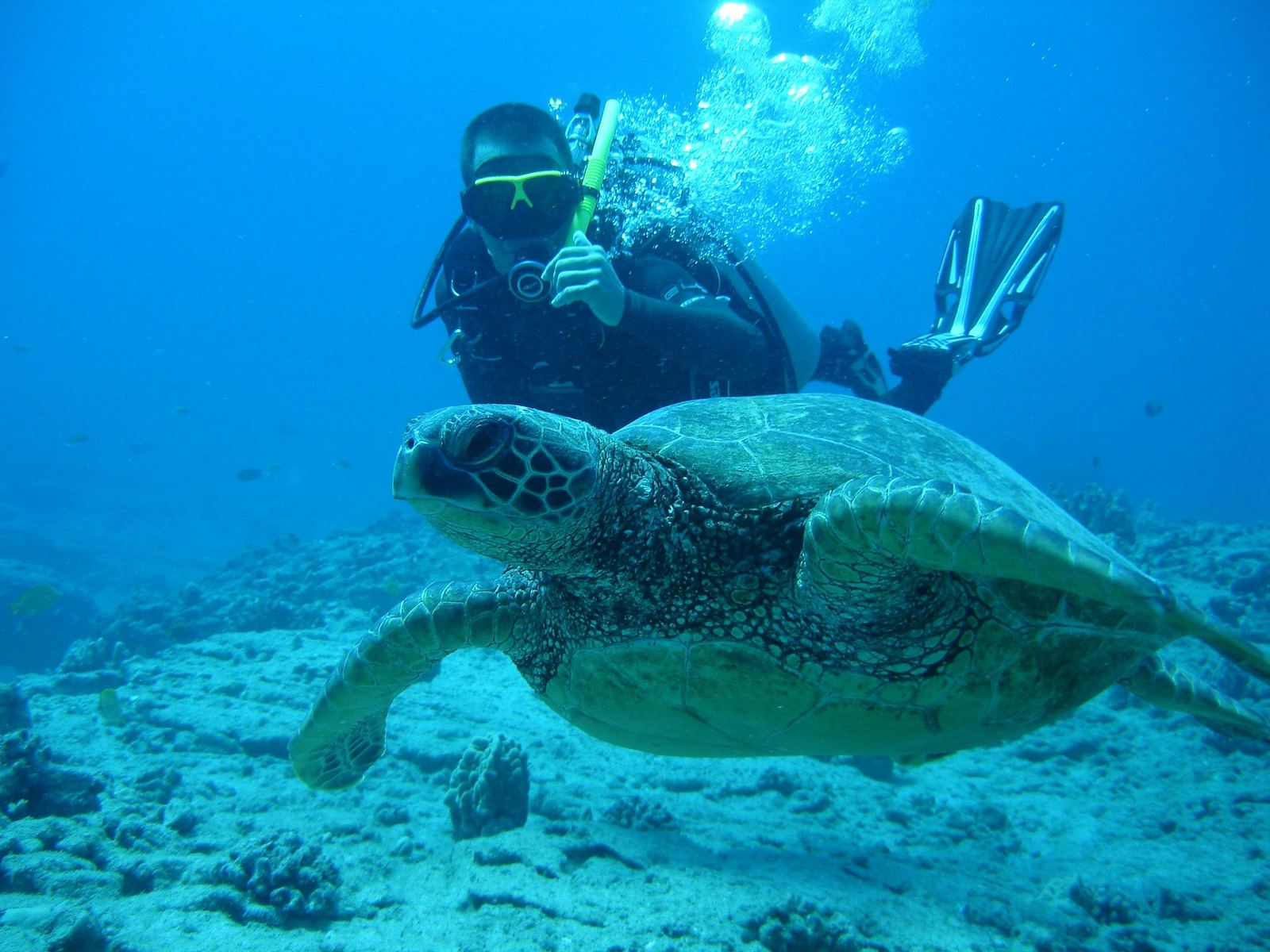
Snorkeling is how most visitors first see a Hawaiian reef, and it asks very little: a mask that seals, a snorkel, fins and an hour of calm water. It also rewards a bit of homework. The same cove can be glassy at 8 a.m. and churning by 2 p.m., a site that is perfect in July can be a surf break in January, and a few of the best-known bays now limit how many people may enter each day.
Below we cover the snorkel sites that consistently show up in dive-operator briefings and official park materials, grouped by island. For each one we note how you get in, what kind of bottom you will float over, which season tends to be kind to it, and any permits or protected-area rules. If you are certified and want to go deeper, our island dive-site guides pick up where this page stops.
- Calmest coasts, winter
- South & leeward shores
- Calmest coasts, summer
- North shores open up
- Reservations needed
- Hanauma Bay, Hāʻena (Kēʻē)
- Boat-only classic
- Molokini Shoal, Maui
- Feeding fish
- Prohibited in MLCDs
- Best habit
- Ask the lifeguard first
How to Read a Snorkel Site Before You Get In
Spend five minutes watching the water from the sand. Count the waves in a set and see where they break. Look for a strip of darker, flatter water heading out through the surf line; that is often a channel where water drains back to sea, and it can carry a tired swimmer away from shore. Notice where other people are getting in and out, and pick your exit before you pick your entry. On lava-rock shorelines, time your entry for the lull between sets and never stand where waves wash over the rocks.
Then ask. Lifeguards on Oʻahu, Maui, Hawaiʻi Island and Kauaʻi know which corner of their beach is pulling that day, and the statewide Hawaii Beach Safety site shows posted hazards at guarded beaches. If there is no lifeguard and the water looks questionable, the Hawaiʻi Tourism Authority's advice is simple: if in doubt, don't go out.
Oʻahu Snorkel Sites
Hanauma Bay Nature Preserve
Hanauma Bay is a volcanic crater on Oʻahu's southeast tip, flooded by the sea and protected as a Marine Life Conservation District. The inner reef is shallow and wide, so on a calm morning beginners can float over coral heads in water not much deeper than they are tall. Because the bay is so popular, the City and County of Honolulu manages it closely: non-residents book a timed entry online, everyone watches a short orientation before going down to the beach, and the preserve is closed on some weekdays and during maintenance periods. Fees and closure days change, so confirm them on the City and County of Honolulu's website rather than relying on an older blog.
Do not mistake shallow for safe. Hanauma Bay has appeared repeatedly in state drowning data, and most of those victims were visitors. Stay inside the inner reef unless you are a strong swimmer, and keep the lifeguards in sight.
Pūpūkea and Shark's Cove
On the North Shore, the Pūpūkea Marine Life Conservation District includes Shark's Cove and Three Tables. In summer, when the North Shore usually goes flat, the lava pools and boulder reef make a striking snorkel with plenty of fish. In winter the same coast receives some of the largest surf in the world, and the cove becomes a place to watch from shore. Water shoes help on the sharp rock, and the entry is easier at the sandy end.
Kuilima Cove
Next to the Turtle Bay resort on the far North Shore, Kuilima Cove sits behind a natural rock barrier that softens incoming swell. It is a common pick for families and nervous first-timers, but the protection ends at the reef line, and conditions outside it can be much rougher.
Maui Snorkel Sites
Molokini Shoal
Molokini is a partly submerged crescent of an old volcanic cone in the channel off South Maui, and it is protected as the Molokini Shoal Marine Life Conservation District. You can reach it only by boat, and most trips leave early because the trade winds tend to build through the day. Inside the crescent the water is usually clear enough to see the bottom from the surface. State rules for the district prohibit taking marine life and feeding fish. See our Maui dive-site guide for the scuba side of the crater, including the back wall.
Honolua Bay
Honolua Bay, north of Kapalua on West Maui, is part of the Honolua–Mokulēʻia Bay Marine Life Conservation District. In calm summer conditions it offers coral-covered walls on both sides of the bay. In winter it is a well-known surf spot. Heavy rain sends red-brown runoff from the valley into the bay, which can cut visibility sharply and carry bacteria; skip it after storms.
Puʻu Kekaʻa (Black Rock) and Kapalua Bay
At the north end of Kāʻanapali Beach, the lava headland of Puʻu Kekaʻa drops into deeper water along its face, and turtles often rest along the rocks. Currents can run around the point, so stay close to the headland and avoid rounding it. A short drive north, Kapalua Bay is a sheltered crescent with reef along both arms, and it tends to be calmer than open beaches nearby.
South Maui coves and ʻĀhihi-Kīnaʻu
The Wailea and Mākena shoreline has a string of small beaches with reef at their rocky ends. Farther south, the ʻĀhihi-Kīnaʻu Natural Area Reserve protects young lava coastline and nearshore waters. Parts of the reserve have been closed to public use for years while the state manages visitor impact, and access rules have changed over time, so check current notices from the DLNR before planning a visit.
Hawaiʻi Island (Big Island) Snorkel Sites
Kahaluʻu Beach Park
South of Kailua-Kona, Kahaluʻu is a small bay sheltered by an old breakwater, with shallow water, a sandy-rock entry and lots of turtles. It is one of the most beginner-friendly snorkel spots in the state when the surf is small. The shallowness is also the hazard: low tide puts reef within reach of your knees and fins, so float flat and never stand on coral.
Two Step (Hōnaunau Bay)
Beside Puʻuhonua o Hōnaunau National Historical Park, Two Step is named for the flat lava ledges that work as natural stairs into the water. The bay drops off quickly into clear water and is popular with both snorkelers and divers. There is no sandy beach and no lifeguard, so this is a site for people comfortable entering from rock.
Kealakekua Bay
Kealakekua Bay is a Marine Life Conservation District and a state historical park, and its far shore near the Captain Cook Monument has some of the healthiest-looking reef on the Kona coast. Getting there is regulated: DLNR State Parks requires vessels transiting the bay, including rental kayaks, to hold a permit, and landing at Kaʻawaloa is restricted. Many visitors go with a permitted kayak or boat tour, or hike the steep trail. Check the State Parks page for the current rules before you rent anything.
The manta ray night snorkel
Off the Kona coast, operators set lights in the water after dark. The lights gather plankton and the resident reef manta rays come in to feed. Snorkelers hold onto a floating light board at the surface while the mantas loop below. It is a guided, boat-based activity, and responsible operators brief guests to stay at the surface and never touch the animals. Our manta ray dive guide explains how it works.
Kauaʻi Snorkel Sites
Tunnels (Makua) and Kēʻē
On the North Shore, the reef at Tunnels forms a wide, shallow lagoon with lava channels along its outer edge. In calm summer conditions it is one of Kauaʻi's best snorkels. In winter the North Shore can be dangerous, and strong currents run through the channels in the reef. Kēʻē Beach, at the end of the road, lies within Hāʻena State Park, where non-residents need an advance entry and parking reservation from the state.
Poʻipū Beach Park
On the sunny South Shore, Poʻipū Beach Park has a lifeguard tower and a small natural ponding area behind a sandbar that families use on calm days. Endangered Hawaiian monk seals sometimes haul out to rest on the sand here; give them plenty of room, as described in our marine-life etiquette guide. South-shore swells, more common in summer, can make the outer water rough.
ʻAnini
Along the North Shore near Princeville, ʻAnini sits behind one of the longer fringing reefs on the island, which keeps the inside water flat much of the time. Stay well inside the reef; the channel at the western end can pull hard toward open water.
| Site | Island | Entry | Usually best | Notes |
|---|---|---|---|---|
| Hanauma Bay | Oʻahu | Sand | Calm mornings | Reservation for non-residents; MLCD |
| Shark's Cove | Oʻahu | Lava rock | Summer | Pūpūkea MLCD; winter surf |
| Molokini | Maui | Boat | Early morning | MLCD; no fish feeding |
| Honolua Bay | Maui | Rock / sand | Summer, no rain | MLCD; runoff after storms |
| Kahaluʻu | Hawaiʻi Island | Sand / rock | Small surf | Very shallow at low tide |
| Two Step | Hawaiʻi Island | Lava ledge | Calm days | No lifeguard |
| Kealakekua Bay | Hawaiʻi Island | Kayak / boat / trail | Mornings | MLCD; vessel permits |
| Tunnels | Kauaʻi | Sand | Summer | Strong channel currents |
| Poʻipū Beach Park | Kauaʻi | Sand | Calm days | Lifeguarded; monk seals |
Snorkel Safety: What the Data Say
Hawaii's Department of Health tracks drownings closely, and snorkeling stands out. Between 2013 and 2022, about 30 percent of the people who drowned in Hawaii were snorkeling, and most of them were visitors. Earlier state analyses found that many snorkeling deaths happened in calm, shallow water, and that older visitors and people with heart or lung conditions were overrepresented. The pattern points to a few practical habits:
- Snorkel at a lifeguarded beach whenever you can, and tell the lifeguard your plan.
- Practice with your gear in shallow water first. Sort out a leaking mask or fogging before you swim out.
- Wear a snorkel vest or other flotation, especially if you are not a strong swimmer.
- Stop at the first sign of breathlessness. Lift your head, take the snorkel out, and float on your back.
- Never snorkel alone, and agree on a hand signal for "I need help."
- See your doctor first if you have a heart or lung condition, and be honest with yourself about fitness.
Our conditions and safety guide goes further into reading surf forecasts, currents and water-quality advisories.
Protect the Reef While You Float
Snorkelers can do as much harm as divers, mostly by standing. Coral is a living animal, and a single footstep can break colonies that took years to grow. Float horizontally, keep your fins off the bottom, and if you need to rest, roll onto your back or head for sand. Use a mineral sunscreen that complies with Hawaii's laws, or better, wear a rash guard; see our page on reef-safe sunscreen rules for what is banned where. Give turtles at least 10 feet, never chase them, and remember that feeding fish is prohibited in Marine Life Conservation Districts and harmful everywhere.