
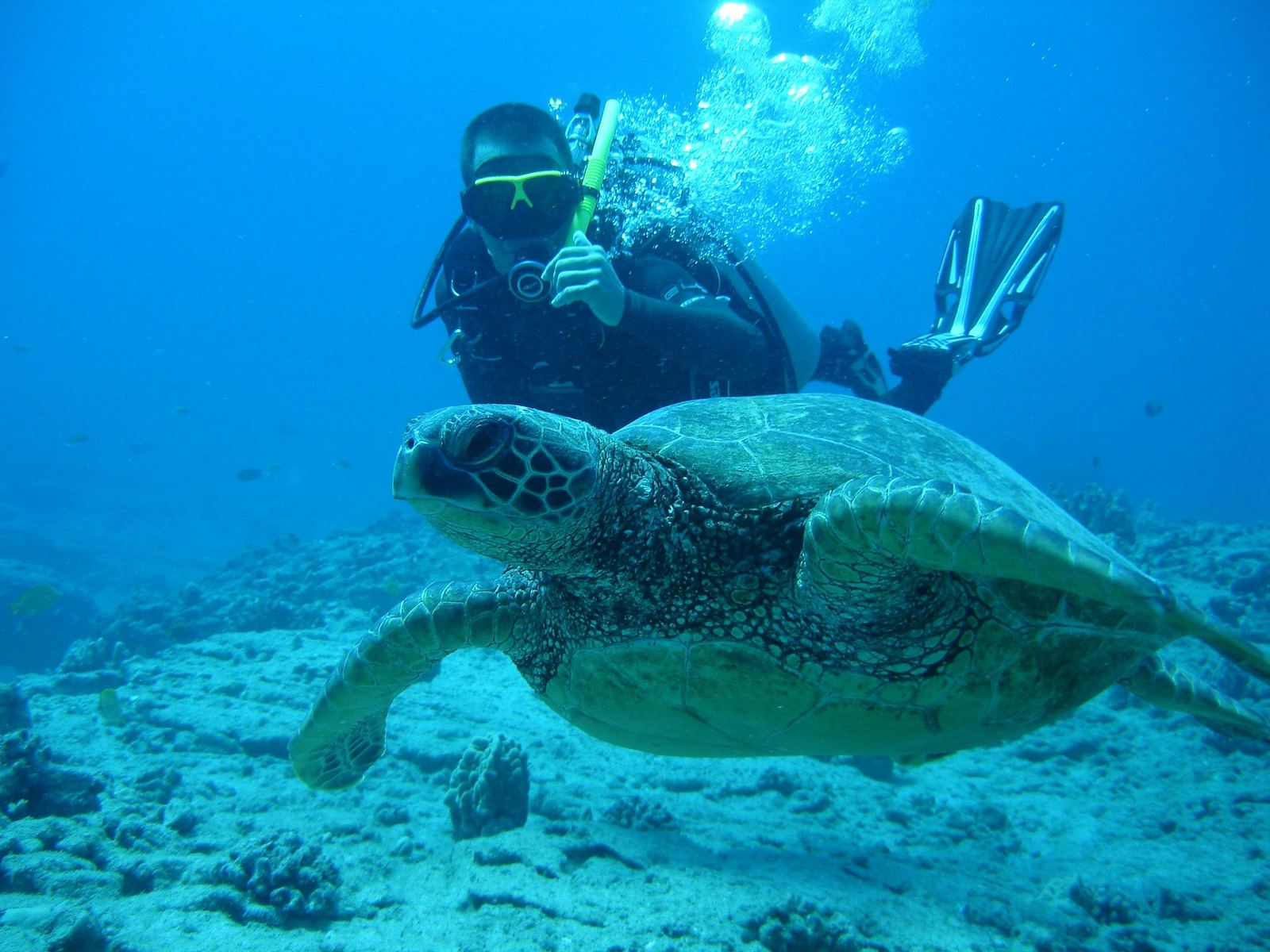
Shore diving is the best-value diving in Hawaiʻi and some of the best diving, full stop. You set your own schedule, dive at dawn before the crowds and the wind, stay as long as your gas lasts, and walk out with the reef still in your eyes. It is also where most visiting divers get into trouble, because Hawaiʻi's shorelines are nothing like the sandy, sheltered entries many people learned on.
This guide covers what is different about shore diving here, how to read a site before you commit, how to get in and out over lava, the state's dive-flag rule, and the shore sites worth your time on each island. It assumes you are certified and comfortable diving without a guide; if not, book a guided shore dive with a local shop first.
Why Hawaiʻi Shore Diving Is Different
- No continental shelf. Open-ocean swell arrives at the reef with almost all its energy. A forecast of a few feet of swell can mean powerful surge in the shallows and a dangerous exit.
- Lava, not sand. Many of the best entries are lava ledges, boulder beaches or old boat ramps. They are sharp, slippery and unforgiving when a wave knocks you over in full gear.
- Few lifeguards. County lifeguard towers are at the busiest swimming beaches. Almost no dive entry has one. Kauaʻi officials say about 95 percent of that island's drownings happen at unguarded beaches.
- Seasonal coasts. North-facing entries are usually unusable in winter; south-facing ones take summer swell. A site that was easy last July may be closed this January.
Before You Leave the Car
- Read the forecast the night before. The National Weather Service in Honolulu forecasts surf by shore and issues high surf advisories: 15 feet for north-facing shores, 12 feet for west-facing shores (8 feet on the Big Island), 10 feet for south- and east-facing shores. Any advisory on your coast means dive somewhere else.
- Check posted hazards. Hawaii Beach Safety shows warnings at lifeguarded beaches, which is a good proxy for what nearby unguarded entries are doing. After heavy rain, check the Department of Health's brown-water advisories.
- Watch the water for ten minutes. Sets arrive in groups with lulls between them. Watch long enough to see the biggest set, then decide. If you would not want to exit in the biggest wave you saw, do not go in.
- Pick your exit before you enter, and a second exit in case the first one gets worse while you are down.
- Tell someone ashore where you are diving and when you expect to be out.
Getting In and Out
Sandy beaches
Ulua Beach in Wailea and Electric Beach on Oʻahu start from sand. Put fins on in knee-to-waist-deep water between waves, or back in with fins in hand if there is shorebreak. Keep your mask on and regulator in until you are past the break; losing a mask in the impact zone is how sand-beach entries go wrong.
Lava ledges
At Two Step on the Kona coast, the entry is a natural lava shelf with steps worn into it. Gear up fully on the ledge, wait for a surge to fill the step, and step or slide off as the water rises. Exit the same way: approach on your belly, let a surge lift you onto the shelf, grab, and get your knees under you before the water drains away. Hard-soled booties make a large difference.
Boat ramps
Koloa Landing on Kauaʻi, Mākena Landing on Maui and the ramp at Mala Wharf give some of the easiest entries in the state. The catch is boat traffic. Do not linger in the ramp area, stay close to the side, and display your flag.
Rocky coves and boulder beaches
Shark's Cove and Puakō involve rough lava or rounded boulders. Move slowly, use your fins as little as possible on land, and once you are in waist-deep water, get horizontal and swim rather than walk. On the way out, swim in as far as possible before standing up.
The Dive Flag Rule
Hawaiʻi's boating rules (HAR §13-245-9) prohibit vessels from approaching within 100 feet of a displayed diver's flag in ocean waters, except at slow-no-wake speed when the boat itself is supporting snorkelers or divers. The same rule says divers should not surface more than 100 feet from their flag in ocean waters, except in an emergency, and places no restriction on how far you are from the flag underwater. The flag-size rules in that section are written for vessels; most shore divers tow a small float with a flag on it.
The practical message: tow a float with a flag, surface near it, and on the way back do your safety stop under it. On busy coasts such as Mākena, Kāʻanapali and Hōnaunau, small boats, kayaks and personal watercraft pass close to shore.
Tanks, Parking and Valuables
Dive shops on every island rent tanks and weights for shore diving and sell fills; most also rent full kits. Ask the shop where they would dive that day: local staff know which coast is working. At the site, park legally (several Maui and Kona entries have small lots that fill early), and leave nothing visible in the car. Many divers carry only a car key in a zippered BCD pocket.
Best Shore Dives by Island
| Site | Island | Depth | Exposure | MLCD |
|---|---|---|---|---|
| Electric Beach (Kahe Point) | Oʻahu | About 30–55 ft at the outfall pipes | West-facing | — |
| Shark's Cove & Three Tables | Oʻahu | About 10–45 ft | North-facing | Pūpūkea MLCD |
| Five Caves / Mākena Landing | Maui & Lānaʻi | About 30–40 ft | South-facing | — |
| Ulua Beach | Maui & Lānaʻi | About 10 ft at the beach to 40 ft or more on the outer reef | South-facing | — |
| Mala Wharf | Maui & Lānaʻi | To about 35 ft | West-facing | — |
| Black Rock (Puʻu Kekaʻa) | Maui & Lānaʻi | To about 35 ft along the face of the point | West-facing | — |
| Honolua Bay | Maui & Lānaʻi | Shallow reef along both sides of the bay | North-facing | Honolua–Mokulēʻia Bay MLCD |
| Two Step (Hōnaunau Bay) | Hawaiʻi Island (Big Island) | Shallow along the shore; reef slopes to about 80 ft over sand mid-bay | Leeward Kona coast | — |
| Puakō | Hawaiʻi Island (Big Island) | Mostly 15–35 ft | North Kohala coast | — |
| Old Kona Airport (Pāwai Bay area) | Hawaiʻi Island (Big Island) | Shallow reef shelf near shore | Leeward Kona coast | Old Kona Airport MLCD |
| Koloa Landing | Kauaʻi | Mostly 10–40 ft, about 50 ft at the deepest | South-facing | — |
| Tunnels (Makua) Beach | Kauaʻi | About 15–60 ft along the outer reef | North-facing | — |
Every site above has a full briefing with access, parking and season on its island page. The Dive Site Finder can filter to shore dives only for the month of your trip.
Oʻahu
In summer, Shark's Cove and Three Tables in the Pūpūkea MLCD are the island's best: lava arches, swim-throughs and whitetip reef sharks under ledges. Year-round, Electric Beach on the leeward coast has turtles and big schools of fish at the warm-water outfall, with a current to respect.
Maui
Five Caves at Mākena Landing, Ulua Beach in Wailea and Mala Wharf north of Lahaina are the classic trio. Mala is sheltered from most swell and is the usual fallback when other coasts are rough. Honolua Bay is a summer-only shore dive inside an MLCD.
Hawaiʻi Island
Two Step at Hōnaunau and Puakō are two of the best shore dives in the state. Old Kona Airport is easy to reach but only worth it on very small swell days. Local guides suggest no more than about 2 feet of swell for Old Kona Airport and 4 feet for Mahukona in North Kohala.
Kauaʻi
Koloa Landing is Kauaʻi's everyday shore dive and works most of the year. Tunnels on the north shore is superb but summer-only, with a long swim and limited parking.
Wildlife and Reef Rules From Shore
Turtles rest in the shallows near many entries and haul out on beaches; NOAA asks people to stay at least 10 feet away. Hawaiian monk seals sometimes sleep on dive beaches, and the guidance is 50 feet, or 150 feet from a mother and pup. Several of the best shore sites are inside Marine Life Conservation Districts, where taking anything, including empty shells, is prohibited; see the MLCD rules guide. And because you will spend time in the sun at the entry, use mineral sunscreen; Maui County allows nothing else. See our sunscreen rules.
Night Shore Dives
Koloa Landing, Black Rock at Kāʻanapali and Mala Wharf are popular night shore dives, with octopus, eels and crustaceans out hunting. Dive them first in daylight so you know the entry, exit and layout. Carry a primary and a backup light, put a light on the float or at the exit point, and keep the dive shallow and simple.
The most important skill in Hawaiʻi shore diving is deciding not to go in.